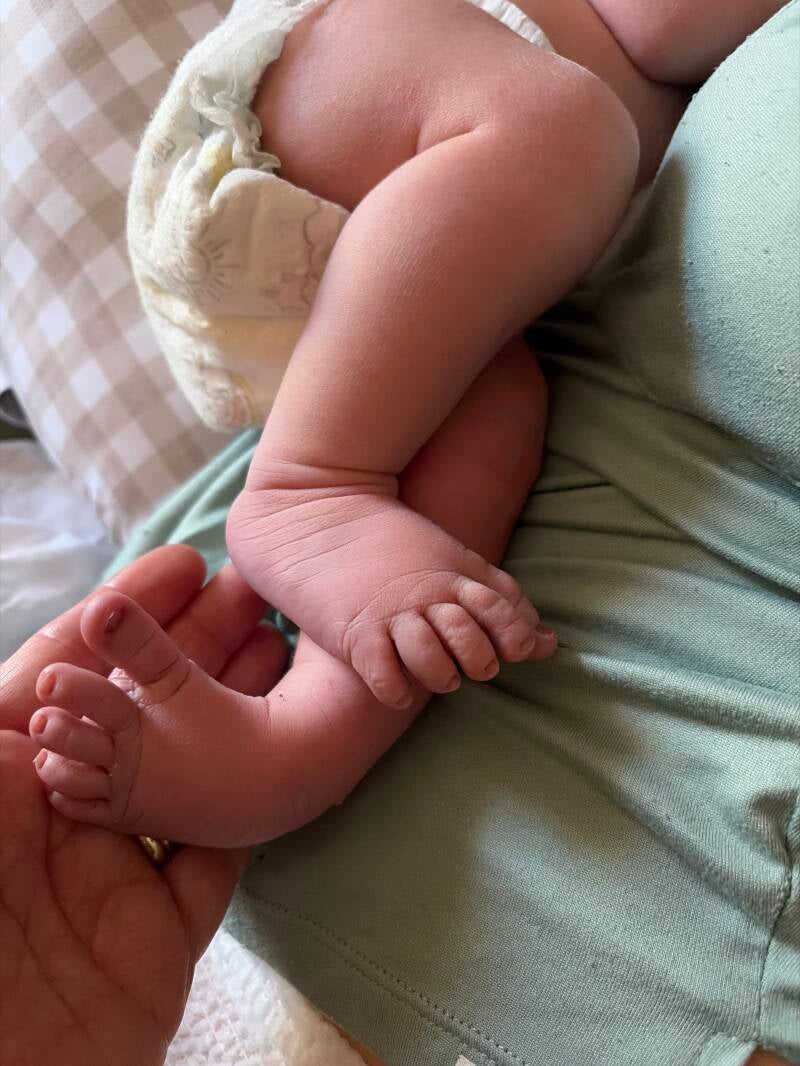
“Fear not, for I am with you; be not dismayed, for I am your God.”
Isaiah 41:10
If You’re Reading This…
If you’re reading this because your baby was just diagnosed with clubfoot, I’m so sorry you’re here.
I know the fear.
I know the tears.
I know the late-night Google searches and wondering if your baby will ever walk, run, or play like everyone else.
I also want you to know something I wish someone had told me on the day Milo was born…
Your baby is going to be okay.
This journey may not look like what you expected, but you are not alone. I hope sharing our story helps you feel a little less scared.
Clubfoot… What Is It?
Clubfoot, also called Talipes Equinovarus, is a condition where a baby’s foot is turned inward and downward because the muscles, tendons, and ligaments are tighter than usual.
It affects about 1 in every 1,000 babies, is more common in boys than girls, and can affect one foot or both.
One of the first questions I asked was…
“What did I do wrong?”
The answer?
Nothing.
Clubfoot isn’t caused by something you ate, something you lifted, or something you did during pregnancy. Sometimes it runs in families, but many babies with clubfoot have no family history at all.
God knit your baby together perfectly, and although this wasn’t part of your plan, it wasn’t outside of His.
Finding Out
Because we planned a home birth, we decided not to have the anatomy scan during my pregnancy.
Personally, we just didn’t want to spend the money on it.
Our midwife explained why the scan is typically recommended, talked through the risks of declining it, and then let us make the decision ourselves. She also shared that she hadn’t had one with either of her pregnancies.

For many parents, the anatomy scan is when they first learn their baby has clubfoot.
For us…
We found out after Milo was born.
Fresh out of the womb, still covered in blood and crying, I was taking him all in.
His tiny fingers.
His little nose.
His sweet cries.
Then I looked down at his feet.
One of them was twisted inward.
At first, I honestly thought maybe it was because he had been born so quickly. I had never even heard of clubfoot before.
Our midwife hadn’t arrived yet, so I just kept staring at it, wondering if it would straighten out on its own.
When she finally arrived and helped me after the birth, I simply pointed and said,
“His foot…”
She looked at it and replied,
“That is abnormal.”
Looking back now, I can laugh a little because it wasn’t exactly the comforting response I was hoping for. 😂
She quickly explained that she wasn’t a pediatrician and couldn’t diagnose him, but she believed it was clubfoot. She encouraged us to schedule an appointment with our pediatrician, who would then refer us to a pediatric orthopedic specialist.
I remember looking at Caleb. Neither of us really knew what to say. We were both trying to stay calm while quietly wondering what this meant for our little boy.
No parent expects to hear that something may be different about their baby.
Even though clubfoot is very treatable, it still hurts.
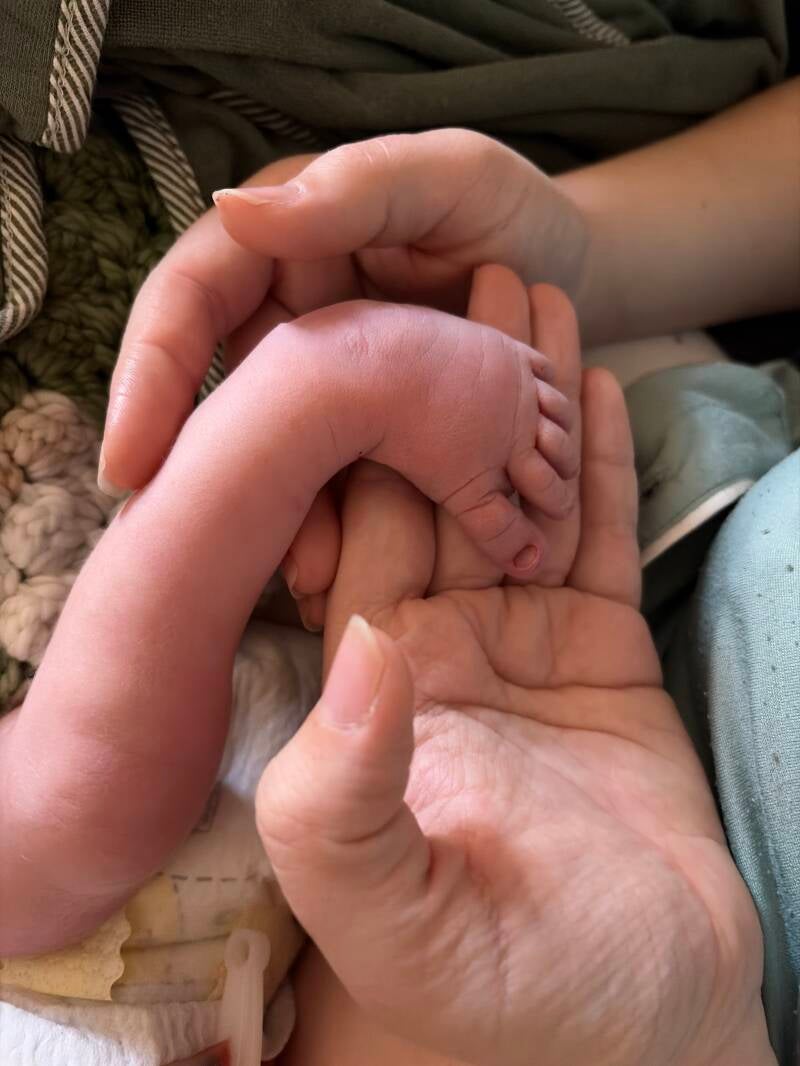
Hearing the Diagnosis
Our pediatrician confirmed that it was clubfoot and referred us to an orthopedic doctor.
Before I tell you about that appointment, let me give you my very first piece of advice.
Do your research.
I’m not saying you should spend hours scrolling social media trying to diagnose your child.
I’m saying learn.
Learn about clubfoot.
Learn about the Ponseti Method.
Learn what treatment usually looks like.
Learn what questions to ask.
The more informed you are, the more confident you’ll feel when making decisions for your child.
I wish someone had told me that.
Our First Orthopedic Appointment
We checked in, filled out paperwork, and waited for the doctor.
She walked into the room…
…then immediately walked back out because she’d forgotten her paperwork.
Not exactly the best first impression.
Now, I know doctors are human, and appearance isn’t what makes someone a great physician, but from the very beginning something just didn’t sit right with me.
She barely examined Milo’s foot before telling us how cute he was and joking that she’d steal him… (I didn’t think it was funny)
Then, during the appointment, she checked a notification on her phone.
Finally, she told us she wanted to wait until Milo was one month old before starting casting.
That surprised me because everything I had read said that treatment usually begins as early as possible while a baby’s tissues are especially flexible.
Then she told us he would most likely need surgery.
Her plan was to begin casting at one month old, cast for about two months, and then operate around three months because that was when she felt comfortable performing surgery.
My heart dropped.
Surgery?
I already struggled to trust doctors, and hearing that after what felt like such a brief examination was incredibly difficult.
We left with more questions than answers.
What I Learned
On the drive home, I kept researching.
One thing I learned is that the Ponseti Method is considered the gold standard for treating most babies with clubfoot.
It usually includes:
• Gentle stretching
• A series of weekly casts that slowly move the foot into the correct position
• An Achilles tenotomy (a small procedure that many babies need to release the tight tendon)
• Boots and bar bracing for several years to help prevent the foot from turning back in
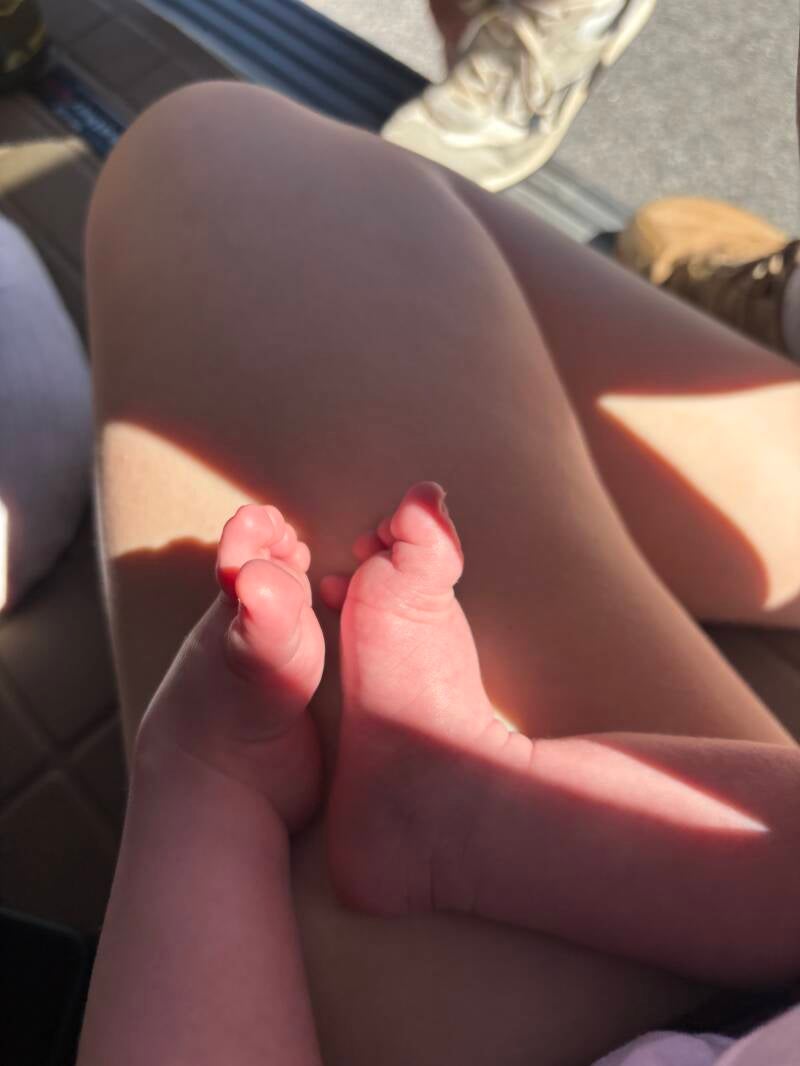
I also learned that while many babies need a tenotomy, that’s very different from the extensive reconstructive surgeries that used to be common years ago.
The more I learned, the more I realized…
I wanted another opinion.
So we changed doctors.
Finding another doctor gave me peace…
…or at least, that’s what I thought.
But that’s a story for another blog.
Things I Wish Someone Had Told Me
Before I end this post, here are a few things I wish someone had told me.
🤍 Clubfoot isn’t your fault.
🤍 Your baby isn’t broken.
🤍 Treatment is a marathon, not a sprint.
🤍 It’s okay to ask questions.
🤍 It’s okay to seek a second opinion if something doesn’t feel right.
🤍 You are stronger than you think.
If I Could Go Back…
If I could go back to the day Milo was born and whisper one thing to that scared first-time mom holding her newborn…
I’d simply say,
“He’s going to be okay.”
The road isn’t always easy.
There will be casts.
There may be a tenotomy.
There will almost certainly be boots and bar bracing.
There will be tears.
There will be hard appointments.
There will be moments when you wonder if you’re making the right decisions.
But every cast.
Every appointment.
Every difficult day.
They’re all working toward one goal…
Giving your child the best chance at a strong, functional foot.
One day you’ll watch your little one running across the yard, climbing playgrounds, chasing siblings, or kicking a soccer ball.
And you’ll realize every appointment was worth it.
Walking This Journey Together 🤍
One of the reasons I wanted to share our story is because I remember feeling so alone when we first heard the word clubfoot.
If sharing Milo’s journey helps even one family feel a little less afraid, then every word I’ve written is worth it.
If your child has clubfoot, I’d love to hear your story. Leave a comment below or send me a message on Instagram @Milos.Mummy. Some of the greatest encouragement I’ve received has come from other parents who truly understand this journey.
My prayer is that Milo’s Mummy becomes a place where families can find hope, practical resources, and the reminder that they never have to walk this road alone.
See you in Part 2. 🤍
Add comment
Comments